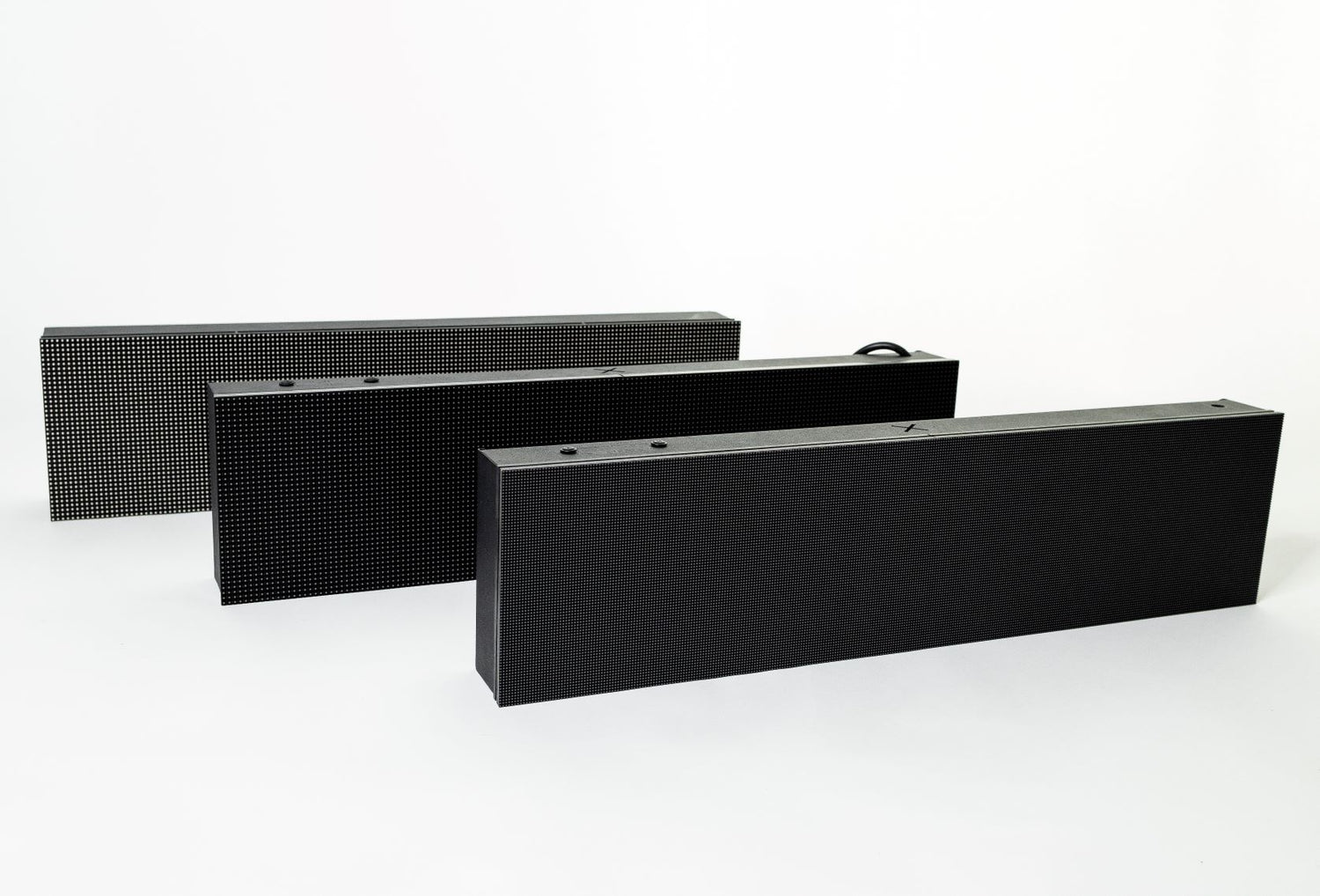


What Does Pixel Pitch Mean in LED Displays? Differences Between P4 and P5
Share
The pixel pitch of an LED display indicates the distance between the centers of two adjacent LEDs. The smaller the pixel pitch, the closer the LEDs are placed – resulting in higher resolution. Displays with smaller pixel pitches produce sharper images at shorter viewing distances but are also more complex and expensive to manufacture.
P4 vs. P5 – The Difference Is in the Distance
In LED display terminology, the pixel pitch is indicated with the prefix “P.” A P4 display has a pixel pitch of 4 mm, while a P5 display has 5 mm.
This means that a P4 display contains about 62,500 pixels per square meter, whereas a P5 display has around 40,000 pixels per square meter.
The higher pixel density of P4 delivers more detailed images, but it also comes at a higher cost compared to P5.
Viewing Distance
The optimal viewing distance depends directly on the pixel pitch. For P4 displays, a distance of around 4–30 meters is recommended, while P5 displays remain clearly visible from about 5 meters and beyond.
For shop windows, trade fair stands, or installations where viewers are close to the screen, P4 is ideal. For longer distances – such as outdoor advertising near roads or parking lots – a P5 display is often sufficient.
Conclusion
When purchasing an LED display, the pixel pitch should match the intended use:
Smaller pixel pitches provide higher resolution for short distances, while larger pixel pitches are more cost-effective for long viewing distances.
Our LED displays are available in P4 and P5 versions. We’ll be happy to advise you personally on choosing the right system.